Best AI Tools for Digital Marketing in 2026

The world of Digital Marketing is changing fast with AI. By 2026, AI will play a big role in making marketing better. Companies are using AI to make their work easier, connect with customers better, and get more people involved.
AI has made new tools that can handle lots of data, guess what customers will do, and do tasks on their own. This article will look at the top AI tools for digital marketing in 2026. We’ll see what they can do and how they help reach marketing goals.
The Evolution of AI in Digital Marketing
The digital marketing world is changing fast thanks to artificial intelligence. This change has moved businesses from old ways to new, smarter strategies. These strategies rely on data to make decisions.
From Basic Automation to Intelligent Marketing Systems
AI in digital marketing started with simple tools like email software and social media schedulers. These tools were the first steps towards more advanced systems. Now, these systems can understand what customers want and predict what they might like next.
Key AI Advancements Shaping Digital Marketing in 2026
In 2026, AI will play a big role in digital marketing. It will include machine learning for SEO, predictive analytics, and natural language processing. These tools help businesses tailor their marketing, engage with customers better, and stay competitive.
Machine learning is especially changing SEO. It helps find the best keywords and optimize content. This leads to better search rankings and more successful marketing campaigns.
AI Tools for Digital Marketing: A 2026 Landscape Overview
As we near 2026, the digital marketing world is on the verge of a big change. AI tools are making marketing smarter, helping businesses use data better.
Core Technologies Powering Marketing AI
Machine learning, natural language processing, and predictive analytics are key to marketing AI. They help marketers dig into big data, get to know customers, and make marketing more personal.
How AI Will Transform Marketing Strategies
AI is changing marketing by making it more personal, engaging, and efficient. It lets marketers guess what customers want, find new chances, and check how well their ads work.
Integration of Quantum Computing in Marketing AI
Adding quantum computing to marketing AI could make data analysis even faster. It could help target and personalize ads more accurately. Quantum computing might solve marketing problems that are too hard or take too long now.
This could lead to big improvements in predicting what customers will do, dividing them into groups, and making ads better. Early users could get a big advantage over others.
AI-Powered Content Creation Tools
The rise of AI-powered content creation tools is changing digital marketing. These tools make content production faster and open up new creative and personal options.
Advanced Natural Language Generation Platforms
Advanced natural language generation (NLG) platforms lead in AI content creation. They use smart algorithms to create top-notch, human-like content. This includes blog posts and product descriptions, all at once.
Multimodal Content Creation Systems
Multimodal content creation systems are a big step forward in AI content creation. They can make different types of content, like text, images, and videos. This meets various marketing needs.
Text-to-Video Generation Technologies
Text-to-video generation technologies are exciting in multimodal content creation. They let marketers turn text into engaging videos. This boosts audience interest and keeps them watching.
Automated Visual Content Optimization
Automated visual content optimization is a key feature of AI content tools. These tools look at what people like and how well content does. Then, they adjust visuals to make content more impactful.
As AI content tools get better, they’ll be more important in digital marketing. Marketers can make more engaging, personalized content quickly. This leads to better results and a higher return on investment.
Predictive Analytics and Customer Insights Tools
Advanced predictive analytics and customer insights tools are changing the game for digital marketers. They can now guess what customers want with amazing accuracy. These tools help businesses see what customers will do next, understand their path, and make marketing more personal.
Behavioral Forecasting Platforms
Behavioral forecasting platforms use AI and machine learning to guess what customers will do next. They look at past data and current interactions. This lets marketers tweak their plans to better engage and convert customers.
Real-time Customer Journey Mapping Systems
Real-time customer journey mapping systems give a full view of how customers interact with a brand. They use AI to quickly analyze data. This helps marketers spot issues, find chances to connect, and know what matters most to customers.
Emotion Analysis Technologies
Emotion analysis technologies help understand why customers behave in certain ways. They look at feedback, sentiment, and other emotional signs. This way, businesses can make their messages and experiences more relatable and impactful.
Intent Prediction Frameworks
Intent prediction frameworks guess what customers will do next. They help marketers send content and offers that match what customers need and want. This makes the customer experience better.
Using predictive analytics and customer insights tools, businesses can stay ahead in the market. These tools improve understanding of customers and lead to more effective marketing. This drives growth and makes customers happier.
AI-Enhanced SEO and SEM Tools
The world of SEO and SEM is changing fast with AI. Search engines are getting smarter, and digital marketing needs to keep up.
Semantic Search Optimization Platforms
Semantic search platforms use AI to get what users really mean in their searches. This means better search results for everyone. Digital marketing agencies can make their content better, which helps them rank higher.
Automated Keyword Intelligence Systems
AI-powered keyword systems analyze huge amounts of data. They find important trends and patterns. This helps marketers stay on top and make their content more visible.
Voice Search Optimization Tools
Voice search is becoming more popular. Tools are being made to help with this. They make sure content is ready for voice searches, keeping it relevant.
Visual Search Enhancement Technologies
Visual search is also on the rise. It lets users search with images. This is big for e-commerce and digital marketing.
Using these AI tools, Digital Marketing Agency can do better SEO. They can attract more targeted traffic and grow their online presence.

Conversational Marketing and AI Chatbots
Conversational marketing, powered by AI, is changing how we talk to customers. Businesses use AI chatbots for more personal and efficient talks.
Hyper-Personalized Conversation Engines
Hyper-personalized conversation engines lead in conversational marketing. They use smart AI to get what customers like and respond just right.
Emotion-Aware Customer Service AI
Emotion-aware customer service AI goes further by feeling what customers feel. It answers with empathy, making customers happier and more loyal.
Omnichannel Communication Platforms
Omnichannel platforms make sure customers get the same service everywhere. From social media to messaging apps, AI chatbots keep the service smooth and quick.
Multilingual Real-Time Translation Systems
Multilingual systems remove language barriers, letting businesses reach more people. AI translation systems make talking in real-time possible, growing a company’s audience.
AI in marketing is not just a trend; it’s essential for staying ahead. Using smart conversation engines and platforms, companies can really improve how they talk to customers.
Personalization and Customer Experience AI
AI has changed digital marketing, making personalization better. It lets businesses tailor experiences for customers. This is thanks to advanced AI tools that make content and interactions more personal.
Dynamic Content Personalization Engines
Dynamic content engines use AI to understand customer data and behavior. They make content that fits what each customer likes.
These engines handle lots of data. They look at what customers browse, buy, and who they are. This way, every customer gets a special experience.
Predictive Customer Experience Platforms
Predictive platforms use AI to guess what customers will like. This helps businesses plan their marketing better.
Behavioral Adaptation Systems
Behavioral systems are key in these platforms. They learn from how customers interact and change marketing strategies.
Cross-Channel Experience Orchestration
Cross-channel orchestration makes sure the personalized experience is the same everywhere. This includes social media, email, and in-store visits.
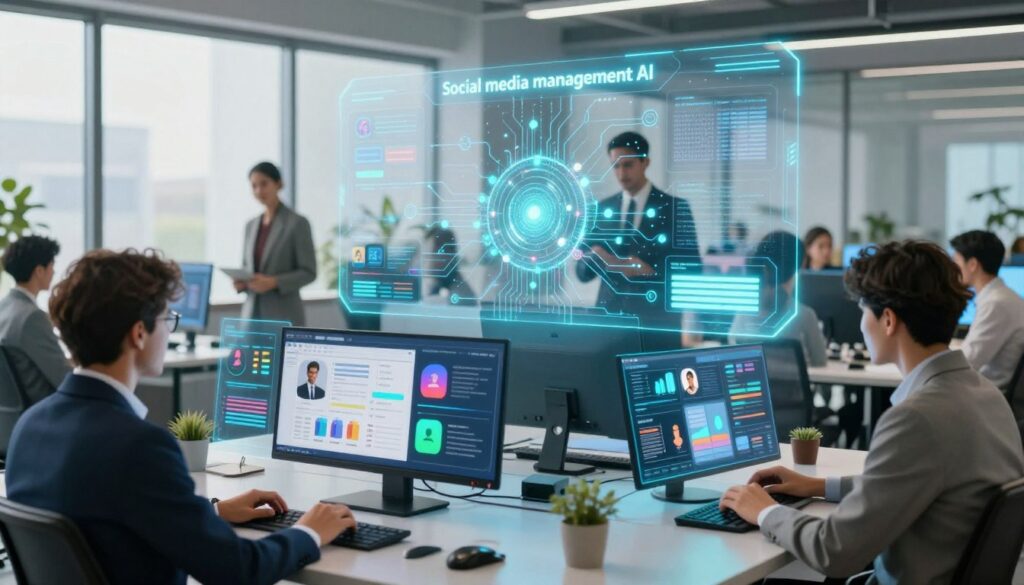
Social Media and Community Management AI
AI is changing Social Media Marketing and community management. It offers tools for predicting trends and recommending content. This helps businesses connect better with their audience and manage their online presence.
Trend Prediction and Content Recommendation Systems
Trend prediction systems use AI to analyze social media data. They find emerging trends and patterns. This lets businesses stay ahead and create content that their audience loves.
Content recommendation systems suggest content based on user preferences. They look at what users like and how they engage.
Automated Community Engagement Platforms
Automated platforms use AI to watch and respond to social media interactions. They keep the brand voice consistent and answer customer questions quickly.
Sentiment Analysis and Crisis Prevention Tools
Sentiment analysis tools check how people feel about a brand on social media. They give insights into public opinion. This helps businesses spot potential crises early and act fast.
Influencer Identification and Partnership AI
AI finds the best influencers for a brand by looking at their reach, engagement, and audience. This makes influencer marketing more effective and impactful.
Marketing Attribution and ROI Analysis Tools
Marketing attribution and ROI analysis are key in 2026. Businesses spend a lot on marketing. It’s important to know if it’s working well.
Today’s customer journeys are complex. They involve many touchpoints and devices. Advanced tools help marketers understand this better.
Multi-Touch Attribution AI Systems
AI systems are changing how we look at marketing. They figure out which marketing efforts led to sales. This helps see how well each part of marketing is doing.
Predictive Budget Allocation Platforms
These platforms use AI to guess how marketing channels will do. They then decide where to spend money. This way, marketers can get the most out of their budget.
Real-Time Campaign Optimization Tools
These tools let marketers change their campaigns as they go. They watch how campaigns are doing and adjust. This makes campaigns better.
Customer Lifetime Value Prediction Engines
These engines predict how much value a customer will bring over time. Marketers can then focus on the most valuable customers. This boosts ROI.
Using these tools, businesses can understand their marketing better. They can make smart choices and grow their marketing efforts.
Ethical Considerations and Data Privacy in AI Marketing
AI is changing marketing, and ethics are key. It raises big questions about privacy, trust, and biased algorithms.
Balancing Personalization with Privacy
Marketers face a big challenge. They need to personalize for customers but also protect their privacy. It’s a delicate balance.
Transparent AI and Consumer Trust
Being open is vital for trust. Marketers should tell how they use AI and data. They must explain their methods clearly.
Regulatory Compliance in the AI Marketing Landscape
Rules for AI marketing are changing fast. Marketers need to keep up with laws like GDPR and CCPA. This ensures they follow the rules.
By focusing on ethics, privacy, and openness, marketers can win trust. This gives them an edge in the AI world.
Conclusion: Preparing for the AI-Driven Marketing Future
Looking ahead to 2026, AI tools will be key in shaping digital marketing. They are changing how we market, making it more personal and efficient. This means businesses can offer better experiences to their customers.
The future of marketing with AI includes better predictions, smarter content, and more personal interactions. Marketers who use these AI tools will find it easier to keep up with the changing marketing world in 2026.
To get ready for this future, companies need to invest in AI, learn new skills, and encourage innovation. This way, they can fully use AI for marketing and stay competitive.
Digital marketing is always changing, and AI’s role will keep growing. By understanding AI’s benefits and challenges, marketers can make their campaigns more effective. This will help businesses succeed in the future.
FAQ
What are the best AI tools for digital marketing in 2026?
How is AI transforming digital marketing strategies?
What is the role of machine learning in SEO?
How do AI chatbots enhance customer experience?
What are the benefits of using predictive analytics in digital marketing?
How does AI impact data privacy in digital marketing?
What are the key AI advancements shaping digital marketing in 2026?
How can businesses prepare for an AI-driven marketing future?

Why Hiring a Professional Digital Marketing Agency Saves Time and Money

In today’s fast-paced world, having a strong online presence is key to success. Companies are always searching for ways to boost their online presence without spending too much or taking away from their main work.
Choosing a professional Online Marketing Company can really help. By handing over their online tasks, businesses can save time and resources. A skilled digital marketing agency knows how to create winning strategies. This makes sure a brand stands out and competes well online.
Using a professional agency’s services can save you both time and money. It also improves your online presence through top-notch SEO services.
The Hidden Costs of DIY Digital Marketing
DIY digital marketing might look cheap at first, but it has hidden costs. Companies trying to handle their marketing alone face big expenses and challenges.
The Learning Curve: Time Investment for Marketing Skills
Learning digital marketing takes a lot of time. Employees need to get good at social media, making content, and checking how campaigns do.
Software Subscriptions and Tool Expenses
There’s also the cost of software and tools. These can get expensive, especially for PPC ads and making websites better.
The Financial Impact of Marketing Mistakes
Marketing mistakes can cost a lot. Mistakes in setting up campaigns or targeting can waste money and miss chances. This hurts the company’s profits.
How a Professional Digital Marketing Agency Delivers ROI
Working with a professional Digital Marketing Agency can greatly improve your return on investment (ROI). They use targeted marketing strategies. This is thanks to their specialized knowledge, time-saving, and access to top tools and technologies.
Specialized Expertise Across Multiple Channels
A top digital marketing agency has experts from different fields. They work together to create and apply effective marketing plans. This includes:
SEO and Content Marketing Professionals
SEO and content marketing teams create top-notch, optimized content. This content speaks to the audience and boosts search rankings.
Social Media and PPC Advertising Specialists
Experts in social media and PPC Advertising craft campaigns. These campaigns aim to increase engagement and conversions on various platforms.

Time-Saving Benefits for Business Owners
Outsourcing digital marketing to a professional agency saves business owners time. They can then focus on their main business tasks. This includes:
Streamlined Campaign Management
Agencies handle campaigns efficiently. They make sure everything works well together and is effective.
Consistent Content Creation and Publishing
Regular content creation and publishing keep the brand voice consistent. It also keeps the audience interested.
Cost-Effective Access to Premium Tools and Technologies
Professional digital marketing agencies have access to the best tools and technologies. They use these to create and apply marketing strategies. This is done without the business needing to spend a lot of money upfront.
Maximizing ROI with Professional Digital Marketing Services
Working with a Professional Digital Marketing Agency can save businesses time and money. They get access to specialized skills across many channels. This includes social media paid marketing services and Pay-Per-Click Services, helping manage campaigns better.
These agencies also offer cost-effective tools and technologies. This helps businesses stay competitive and meet their marketing goals. Whether it’s through Social Media Marketing Services or complete Digital Marketing Services, they help increase ROI.
Hiring a professional digital marketing agency is a smart move. It lets companies use the latest expertise and technologies. This drives growth and revenue.
FAQ
What services do digital marketing agencies typically offer?
How can a digital marketing agency help my business save time?
What is the benefit of hiring a professional digital marketing agency over handling it in-house?
How do digital marketing agencies measure the success of their campaigns?
Can a digital marketing agency help my business improve its online visibility?
What is the typical cost of hiring a digital marketing agency?